Literary Attention in Short Fiction, or: What Literature Knows About Attention and Attention Politics

The project is funded by an ERC Advanced Grant (LitAttention, 101141722)


LitAttention now has its own website!
Please visit us under https://litattention.eu/
for all up-to-date info regarding our project.

Project Summary

Literature knows a lot about attention – how it is gained and retained, how it is mastered and manipulated. As such it can contribute significantly to current research in interdisciplinary attention studies and offer insight into attention regimes we live by. LitAttention explores this fundamentally under-researched knowledge domain of literature about attention and attention politics by analysing ‘literary attention’ in short fiction.

Integrating approaches from (educational) psychology, computational linguistics, and literary and cultural studies, LitAttention explores the poetics and politics of attention in short fiction, develops methodological and conceptual frameworks for examining literary attention, and introduces the important role of literary attention for education.

The project is structured into several subprojects. Current subprojects examine attention in 19th-century short fiction, the short story as attention narrative, literary attention in educational short fiction, and develop computational models for analysing literary attention. Two further subprojects are due to start in 2026.

Keep up with the project here: https://litattention.eu/

Meet the LitAttention Team:

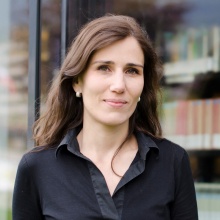
Prof. Dr. Sibylle Baumbach (Project Leader)

Sibylle Baumbach is professor of English literatures and cultures. LitAttention builds on her previous research on literature, attention, and fascination as well as on her expertise in literary theory and interdisciplinary approaches to literature. She is Principal Investigator of LitAttention and focuses on developments of the short story as attention narrative.

Dr. Christy J. Gu (Postdoctoral Research Fellow)

Christy J. Gu focuses on identifying stylistic devices in short fiction that are related to attention manipulation and using empirical methods to examine their potential effects. Additionally, she explores how and to what extent these identified patterns may influence attention from the perspective of educational psychology.

Hannah Armour (Doctoral Researcher)

Hannah Armour is a PhD student with a Masters from the University of Oxford and a BA from Royal Holloway, University of London. Her PhD thesis, looking at the relationship between the role of attention and the rise of short fiction between 1800 and 1880, will form part of the LitAttention project. Her research examines the methods by which short fiction forms cater themselves to changing attention economies and environments, especially regarding the emergence of genres such as those that centralise discussions of the educational, psychological, detective and gothic.

Jan Angermeier (Doctoral Researcher)

Jan Angermeier is a PhD student at the University of Stuttgart, with a Master of Arts in Digital Humanities and a Bachelor of Arts in English and Political Science. His PhD thesis, focusing on computational modelling of attention-related literary phenomena in short fiction, constitutes part of the LitAttention project. His research examines how short fiction adapts to changing attention economies and environments, particularly through the use of syntactic, semantic, and narrative strategies that elicit attention. Jan Angermeier's work involves developing methodological frameworks and utilising machine learning models to analyse literary attention devices, contributing to the interdisciplinary field of attention studies.

Reem Chehab (Doctoral Researcher)

Reem Chehab is a PhD student at the University of Stuttgart with a Master of Arts and a Bachelor of Arts in English Literature. Her PhD thesis, which forms part of the LitAttention project, examines how microfiction across print and digital media affords attentional engagement under contemporary conditions of digital circulation.

Aurora Angione (Student Research Assistant)

Aurora Angione is an MA student of English and American Studies at the University of Stuttgart and a research assistant in the LitAttention project. Her interest in Anglophone literature began in high school and continued during her BA in Modern Languages and Civilisations at the University of Padua, Italy. Her current research interests revolve around themes of embodiment and posthuman feminist theory in sci-fi fiction, and she also has a strong interest in Gothic and horror fiction.

Max Schmid (Student Research Assistant)

Max Schmid is a Masters student at the University of Stuttgart, where he has also completed his Bachelor of Arts in English Literatures & Linguistics. His BA thesis dealt with Applications of Structure Removal in Minimalist Syntax of English and German. In English Literatures, Max Schmid is interested in formalist analyses of fragmentation in (Post-)Modernist poetry and prose as well as renditions of Apocalypse in the attention regimes of contemporary speculative fiction.


Funded by the European Union. Views and opinions expressed are however those of the author(s) only and do not necessarily reflect those of the European Union or the European Research Council Executive Agency. Neither the European Union nor the granting authority can be held responsible for them.

To the top of the page